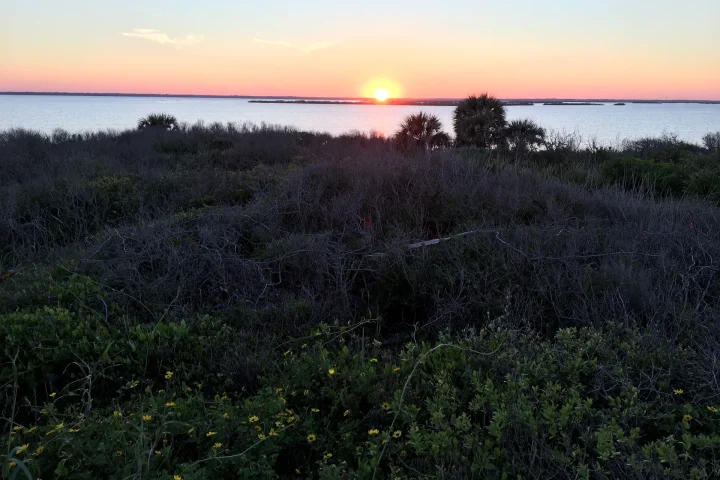
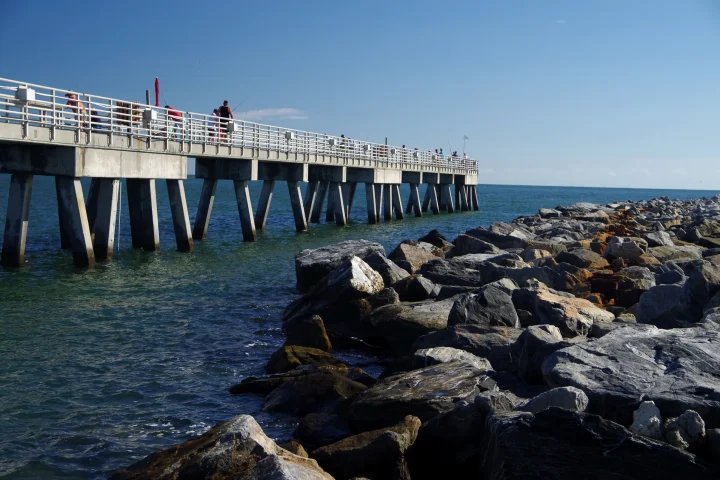
Port Canaveral is more than a departure point. Cruise activity is part of a working waterfront that also has maritime businesses, fishing connections and places where visitors can pause for a meal. A useful approach is to understand which parts of the port are public visitor areas and which are operational spaces, then choose a simple plan around the places you can actually access.
The Cove is the name to look for when researching the waterfront dining area. The regional tourism directory describes seafood businesses there with roots in commercial fishing. That context is more useful than a claim that every meal is the freshest or every view is the best. Compare current menus and practical details directly with the businesses you are considering.
Choose the setting as well as the menu
A waterfront meal can be a pause in the day rather than another attraction to complete. Think about whether your group wants a shaded outdoor setting, an indoor break or a quick meal before traveling onward. Dietary needs and accessibility requirements deserve direct confirmation. Do not assume that a restaurant’s location beside the port tells you its opening hours, booking policy or seafood sourcing.
Allow time to arrive, find the correct parking area and walk to your destination. The cruise terminal named on your booking may be some distance from the place you want to eat. Check addresses individually, and do not rely on a broad “Port Canaveral” label to establish that two places are next door.
Enjoy an active harbor respectfully
Vessels and port infrastructure give the waterfront much of its character. Observe from permitted public areas and follow signs. Avoid entering working spaces for a photograph, blocking access or assuming a dock is open because it is visible from a road. A long-lens view or a patient pause can communicate the place without stepping beyond visitor boundaries.
- Confirm the exact restaurant or public waterfront address.
- Check transport and parking separately from cruise-terminal arrangements.
- Read current menu and accessibility information.
- Keep operational areas, docks and private property out of the itinerary.
Combine a meal with one nearby interest
A little structure helps. Pair the waterfront with beach time around Jetty Park, or make it the quieter part of a day focused on space history. Avoid planning several distant stops around a tightly timed departure. The best combination depends on your transport and the fixed commitments already in the day.
If you are about to board a cruise, follow the cruise line’s arrival instructions first. If you have returned from one, consider luggage, onward transport and your group’s energy before adding sightseeing. A meal with a view may be enough, and that is a perfectly reasonable use of time ashore.
Read offers without relying on old assumptions
Menus, operators and access arrangements can change. Use this guide for the character of the place, then confirm the details with the provider. No current prices, ratings or availability are asserted here. Where experience listings show those details, review the supplier’s final information before making a decision.
For a wider plan, see a first visit to Cape Canaveral and choosing your base. The source for the dining-area context is Florida’s Space Coast restaurant directory; use Port Canaveral for current port information.